

District Heating Market Set to Advance at a 1.58% CAGR Through 2035 Amid Sustainable Urban Energy Expansion
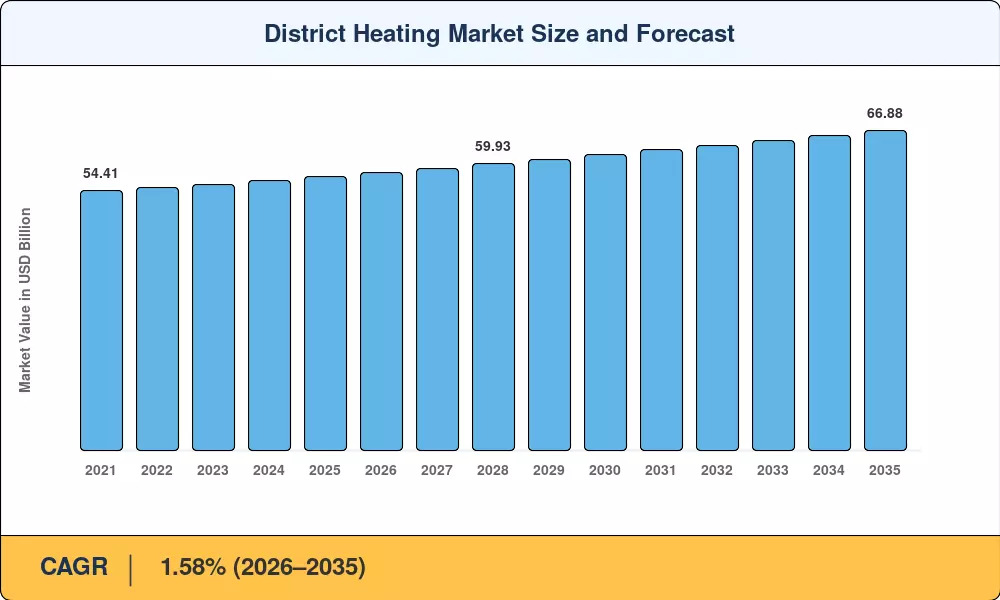
District Heating Market Size
The residential segment captured roughly 57.4% of the District Heating Market in 2025, supported by mandatory connection policies in Nordic countries.
The industrial application segment is projected to grow at a 2.70% CAGR to 2035, fueled by process-heat electrification and decarbonization mandates in heavy industry.”
NEW YORK, NY, UNITED STATES, July 29, 2026 /EINPresswire.com/ -- The District Heating Market was valued at USD 57.18 billion in 2025 and is projected to grow from USD 58.08 billion in 2026 to USD 66.88 billion by 2035, registering a CAGR of 1.58% during the forecast period (2026–2035).— Prashant Hake
Market Overview
District heating Industry is a centralized system for distributing thermal energy, typically in the form of hot water or steam, from a central plant to multiple buildings through a network of insulated pipes. This infrastructure efficiently delivers heat for space heating, domestic hot water, and industrial processes, eliminating the need for individual building boilers and promoting energy efficiency and emission control. The system operates by generating heat at a centralized facility using various energy sources—including combined heat and power (CHP) plants, renewable energy, waste heat from industrial processes, or large-scale heat pumps—and distributing it through well-insulated thermal pipe networks.
Several factors are driving the growth of the district heating market. The increasing focus on energy efficiency and sustainability in urban areas is a primary growth driver. Government initiatives and investments to reduce greenhouse gas emissions, lower energy consumption, and improve air quality are significantly propelling market expansion. Additionally, rapid urbanization and industrialization, particularly in emerging economies, are creating concentrated heat demand in high-density residential and commercial areas, making district heating a cost-effective and scalable solution.
Key industry trends shaping the market include the integration of renewable energy sources such as biomass, geothermal, and solar thermal into district heating networks to reduce carbon footprints. The adoption of smart technologies and digital solutions, including AI-based predictive analytics and smart control systems, is enhancing system efficiency and optimizing energy usage. Furthermore, the modernization of aging district heating infrastructure and the shift toward low-temperature networks are improving efficiency and enabling the integration of low-grade heat sources.
The market is also benefiting from technological advancements in heat production and distribution systems. Innovations such as fourth-generation district heating (4GDH) technology, which leverages low-temperature waste heat and integrates with electricity grids, are gaining traction. Moreover, thermal energy storage systems are being deployed to balance demand fluctuations and support intermittent renewable supply.
Policy and regulatory frameworks are playing a crucial role in shaping the district heating landscape. The implementation of strict emission regulations, carbon taxes, and emissions trading schemes is pushing operators to transition away from fossil fuel-based heating plants. Favorable government policies, including direct financial incentives for renewable-based heating systems and CHP plants, are encouraging wider adoption of these systems. The European Union's Energy Performance of Buildings Directive (EPBD) and national-level heat planning acts, such as Germany's Heat Planning Act, are driving the decarbonization of the heating sector and providing regulatory clarity for the energy transition.
The demand outlook for district heating remains positive, supported by the increasing need for energy security, stable energy supply, and reduced reliance on volatile fossil fuels. The expansion of district heating in cold-climate cities, coupled with the development of heat-as-a-service business models, is expected to create favorable business opportunities. Growing interconnection of regional heating networks to optimize resource use and reduce redundancies will further accelerate market growth.
Get Free Sample Report for Detailed Market Insights: https://www.marketresearchfuture.com/sample_request/19255
Market Segmentation
By Heat Source: The district heating market is categorized into natural gas, renewables (including biomass, geothermal, and solar thermal), oil and petroleum products, and coal. The renewables segment is expected to witness the fastest growth during the forecast period, driven by increasing environmental concerns and supportive government policies promoting clean energy adoption. Natural gas remains a dominant heat source due to its relatively lower carbon emissions compared to coal and oil, along with established infrastructure in many regions.
By Plant Type: The market is segmented into combined heat and power (CHP) plants, heat-only boilers, and thermal energy storage systems. CHP plants hold a significant market share as they offer higher overall efficiency by simultaneously generating electricity and useful heat. Heat-only boilers continue to serve as reliable backup systems, while thermal energy storage systems are emerging as a crucial component for balancing supply-demand dynamics and integrating renewable energy sources.
By Application: The market is divided into residential, commercial, and industrial applications. The residential segment dominates the market, driven by the need for space heating and domestic hot water in urban residential complexes. The commercial segment includes office buildings, shopping centers, hospitals, and educational institutions, while the industrial segment encompasses various manufacturing processes requiring process heat. The commercial and industrial sectors are projected to show steady growth due to increasing awareness of energy efficiency benefits.
By End User: End users of district heating systems include building owners, facility management companies, industrial facility operators, and municipal corporations. Municipalities play a significant role as they are often responsible for urban planning and infrastructure development, making them key decision-makers in district heating projects. Building owners and facility managers are increasingly adopting district heating to reduce operational costs and meet sustainability targets.
By Region: The market is analyzed across North America, Europe, Asia-Pacific, and the Rest of the World. Europe currently dominates the global district heating market, followed by Asia-Pacific, which is expected to register the highest growth rate during the forecast period.
You can buy this market report at: https://www.marketresearchfuture.com/checkout?currency=one_user-USD&report_id=19255
Regional Analysis
North America: The North American district heating market is experiencing steady growth, particularly in the United States and Canada. The region benefits from well-established district heating networks in major cities, coupled with increasing investments in infrastructure modernization. The United States is witnessing growing interest in renewable-based district heating solutions, with several states implementing policies to promote clean energy adoption. Canada's cold climate creates significant demand for reliable heating solutions, driving the adoption of district heating systems in urban centers. However, the market faces challenges from aging infrastructure and the availability of alternative heating technologies.
Europe: Europe holds the largest share of the global district heating market, driven by stringent environmental regulations, ambitious carbon reduction targets, and strong government support for sustainable heating solutions. Countries such as Denmark, Germany, Sweden, and Finland are at the forefront of district heating adoption, with well-developed networks and high penetration rates. The European Union's Green Deal and various national heat planning initiatives are accelerating the transition toward renewable and waste-heat-based district heating systems. The region is also a hub for technological innovation in fourth-generation district heating and thermal energy storage solutions.
Asia-Pacific: The Asia-Pacific region is poised to witness the fastest growth in the district heating market, fueled by rapid urbanization, industrialization, and increasing government focus on energy efficiency. China dominates the regional market, driven by its massive urban population and extensive district heating networks in northern cities. The country is investing heavily in upgrading its district heating infrastructure and integrating renewable energy sources. Japan and South Korea are also significant markets, with growing interest in waste heat recovery and geothermal-based heating systems. India and Southeast Asian countries represent emerging markets with substantial growth potential.
Rest of the World: The Rest of the World, including Latin America, the Middle East, and Africa, presents nascent but promising opportunities for the district heating market. The Middle East's extreme climate conditions and urban development projects create demand for efficient cooling and heating solutions. Latin American countries such as Chile and Argentina are showing growing interest in district heating systems. However, the market's growth in these regions is constrained by limited awareness, insufficient infrastructure, and competing low-cost heating alternatives.
Competitive Landscape / Key Players
The global district heating market is characterized by a mix of established multinational corporations, regional players, and municipal utilities. Key companies operating in the market include:
Fortum Oyj: A Finnish energy company with a strong presence in district heating across the Nordic countries and other European markets. The company focuses on developing low-carbon district heating solutions and integrating renewable energy sources.
Vattenfall AB: A Swedish multinational power company with significant district heating operations in Sweden, Germany, and the Netherlands. Vattenfall is actively pursuing the decarbonization of its heating portfolio through investments in biomass, waste-to-energy, and large-scale heat pumps.
ENGIE SA: A French multinational utility company with extensive district heating and cooling networks in Europe and other regions. ENGIE emphasizes sustainable urban solutions and has been expanding its district heating footprint in emerging markets.
Danfoss A/S: A Danish engineering company that provides district heating components, controls, and solutions. Danfoss is a key player in advancing energy-efficient district heating technologies and promoting the adoption of low-temperature networks.
Other notable players include Veolia Environnement SA, Goteborg Energi AB, Ramboll Group A/S, Logstor A/S, Rehau AG + Co, and various municipal utilities across different regions. These companies are increasingly focusing on strategic partnerships, mergers, and acquisitions to strengthen their market presence and expand their technological capabilities.
Latest Industry News & Developments
December 2025: Fortum announced a major investment in a large-scale heat pump facility in Helsinki, Finland, which will utilize waste heat from data centers to supply district heating to thousands of households. This initiative is part of the company's strategy to achieve carbon-neutral district heating by 2030 and represents a significant milestone in the integration of digital infrastructure with urban heating systems.
October 2025: Vattenfall successfully commissioned a new biomass-powered CHP plant in Berlin, Germany, replacing an aging coal-fired facility. The new plant is expected to reduce carbon emissions by approximately 200,000 tonnes annually and provide reliable district heating to over 50,000 residential units in the city.
September 2025: The European Commission approved a €5 billion investment package for the modernization of district heating networks across Eastern Europe, focusing on the deployment of renewable energy sources and energy efficiency improvements. The funding supports projects in Poland, Czech Republic, and Romania, aligning with the EU's decarbonization goals.
Market Challenges & Opportunities
Key Restraints: Despite the positive growth outlook, the district heating market faces several challenges. High initial capital investment for network infrastructure development and maintenance remains a significant barrier, particularly in developing regions. The long payback period for such projects often deters private investment. Additionally, the presence of established alternative heating technologies, such as individual gas boilers and electric heat pumps, creates competitive pressure. Technical challenges related to heat losses in distribution networks and the integration of intermittent renewable sources also pose operational difficulties.
Emerging Opportunities: The district heating market presents substantial opportunities in the integration of waste heat from industrial processes, data centers, and wastewater treatment plants. The growing focus on circular economy principles is driving the development of industrial symbiosis models where waste heat becomes a valuable resource. The adoption of digitalization and IoT technologies offers opportunities for optimizing network performance and reducing operational costs. The expansion of district cooling networks, leveraging the same infrastructure for seasonal cooling needs, represents an additional revenue stream for operators.
Future Potential: The long-term potential of the district heating market is strongly tied to global decarbonization efforts and the transition to sustainable energy systems. The development of fifth-generation district heating networks, which operate at near-ambient temperatures and enable bidirectional heat flows, could revolutionize the industry. The convergence of heating, cooling, and electricity sectors through sector coupling will create integrated energy systems with enhanced efficiency and flexibility. Emerging markets in Asia, Africa, and Latin America offer significant growth opportunities as urbanization accelerates and governments prioritize sustainable infrastructure.
To explore more market insights, visit us at: https://www.marketresearchfuture.com/reports/district-heating-market-19255
Final Market Summary
The district heating market is poised for steady growth over the forecast period, driven by the global push for energy efficiency, decarbonization, and sustainable urban development. With a projected CAGR of 1.58%, the market is expected to expand from USD 58.08 billion in 2026 to USD 66.88 billion by 2035. Europe continues to lead the market, while Asia-Pacific emerges as the fastest-growing region, supported by rapid urbanization and government initiatives. The integration of renewable energy sources, adoption of smart technologies, and modernization of aging infrastructure are key trends shaping the industry. While challenges such as high capital costs and competition from alternative heating technologies persist, opportunities in waste heat recovery, digitalization, and sector coupling offer promising growth avenues. The long-term potential of the district heating market remains strong, underpinned by its essential role in achieving global climate targets and ensuring sustainable energy supply for urban populations.
More Related Reports from MRFR Library:
HVAC System Market: https://www.marketresearchfuture.com/reports/heating-ventilation-air-conditioning-market-801
Substation Batteries Market: https://www.marketresearchfuture.com/reports/substation-batteries-market-933
Photovoltaic Market: https://www.marketresearchfuture.com/reports/photovoltaic-market-1061
Next Generation Batteries Market: https://www.marketresearchfuture.com/reports/next-generation-batteries-market-1142
Wind Turbine Blade Market: https://www.marketresearchfuture.com/reports/wind-turbine-blade-market-1150
USA HVAC Motors Market: https://www.marketresearchfuture.com/reports/usa-hvac-motors-market-1187
Submersible Pumps Market: https://www.marketresearchfuture.com/reports/submersible-pumps-market-1351
Directional Drilling Market: https://www.marketresearchfuture.com/reports/directional-drilling-market-1375
Wind Power Market: https://www.marketresearchfuture.com/reports/wind-power-market-1511
Renewable Energy Market: https://www.marketresearchfuture.com/reports/renewable-energy-market-1515
Larry Wilson
WantStats Research And Media Pvt. Ltd.
+1 855-661-4441
email us here
Visit us on social media:
LinkedIn
Facebook
YouTube
X
Legal Disclaimer:
EIN Presswire provides this news content "as is" without warranty of any kind. We do not accept any responsibility or liability for the accuracy, content, images, videos, licenses, completeness, legality, or reliability of the information contained in this article. If you have any complaints or copyright issues related to this article, kindly contact the author above.
